Featured

Do you dream in colour?

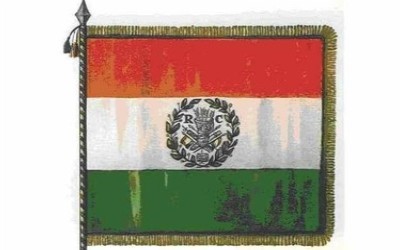
Last week, I was returning in my labour law lecture to the point that labour law legislation has been strongly determined by the ‘colour’ of the government, statutes in colour in my lecture slides, when a non British student asked me to remind them who was red and who was blue. I explained, with a detour into the exception provided by the States, but the question stayed with me enough to look for and find an excellent wikipedia page on political colours. I learnt that calling a politics brown means it is neglectful of the environment and also that the political colour of the Whigs was buff- that lasted. Interesting also to read the attempted mixing of the facing red and blue. Orange and green, opposites in Ireland and in India, have had no such attempt yet. And also the examples of colour emerging not from an expensive branding exercise, but from history and its associations. Or consciously reflecting the associations of different colours, as with the Rainbow Pride Flag created in 1978 to replace the Pink Triangle.

Finally I was reminded of this song by the Sufi poet Bulle Shah of Kasoor: The colourful one made the colours of the world. Our brains need to remember history but to think past single colours.

W Words

As humans, we are distinguished from other creatures by our use of words. Words can move, inspire, scare, comfort, provoke thought and inform as well as just communicate a fact.

And yet, in all institutions I am part of we defer to our ‘comms’ departments, whose main interest and purpose is protection of the organisation. So far as my experience has gone, there is little attempt to get to the bottom of what the client department wants to actually say. In the wake of the appalling Air India crash, The New York Times reported linguistic analysis by @beastoftraal (er, himself a comms specialist) of the CEO’s video showing strong similarities identical to a video posted last year in the wake of an American Airlines crash: https://beastoftraal.com/2025/06/16/about-air-india-ceos-plagiarized-message. It may be that certain things needed to be included, but the impression of a formula is unappealing. The appalling crash called for a more compassionate, human, response from the core. While Kartik Srinivasan sees this as a sign of an unprepared comms department, it is also a consequence of overdependence on the comms line, seeing communications as only for the communications department, when a scenario calls for a human response. Less comms, more compassion.

I teach advocacy – the art of professional persuasion – which also requires following of certain conventions. However, that done, the turn of the phrase to describe a problem, telling your client’s story well, is what creates persuasiveness. Using a formula or a convention is not the end of the road. This is where less deference to comms comes in. There is a formula and then there is the human situation which must be responded to. Otherwise an avatar could do the job – rather like the AI sales call I got yesterday which impersonated the pleasant solar panel consultant I met last year, Harry, but without Harry’s ability to listen, engage, revise. So too with the best advocates. They use words as precision tools.

In my own work as a university teacher, I am now overrun with essays often entirely written by AI, at undergrauate and at postgraduate level. It is instantly recognisable because it is broad brush, often factually wrong, and contains no spark of human thought or drive. It is not only the poor prose. Cases, articles and even statutes are cited with no interest in whether they are real or fake. A recent student even quoted a fake article by me: Equality and the Limits of Individual Enforcement. Good title, but I didnt write it nor did anyone else. Students fess up when I face them with their use of AI. They give the reason as being short of time (not talent).

For law students, this is a problem of legal integrity and judges are rightly reacting to instances of fake cases with clear condemnation. But the danger lies beyond that too. Not keeping to ourselves the power of words will obliterate what makes us human. Just putting this out there. And I didnt even mention poetry. One day I will put Ode to Melancholy into ChatGPT.

MESSAGE IN BOTTLE ON BEACH AT SUNSET – stock photo

You forgot that I was a seed

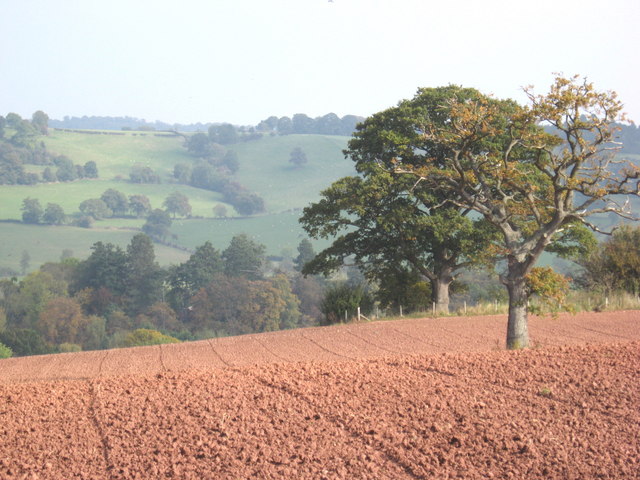
The photo (not mine) is from Herefordshire.

The rich red earth apparently lies dormant now. But anyone with any gardening task to do knows that this is the time to plant seeds. Which brings to mind the couplet written in 1978 by the Greek, gay, poet Dinos Christianopoulos in The Body and the Wormwood:

what didn’t you do to bury me

but you forgot that I was a seed

Used in many protest movements since, the words reveal the strength of optimism for the long-term in the face of repression and invisibilisation. Optimism because of the big miscalculation by those wielding repressive power: that an idea, once expressed and public, can be removed by removing its author. The poem goes further in its assault on repression. The best thing to do to a seed is bury it.

The Chained Library

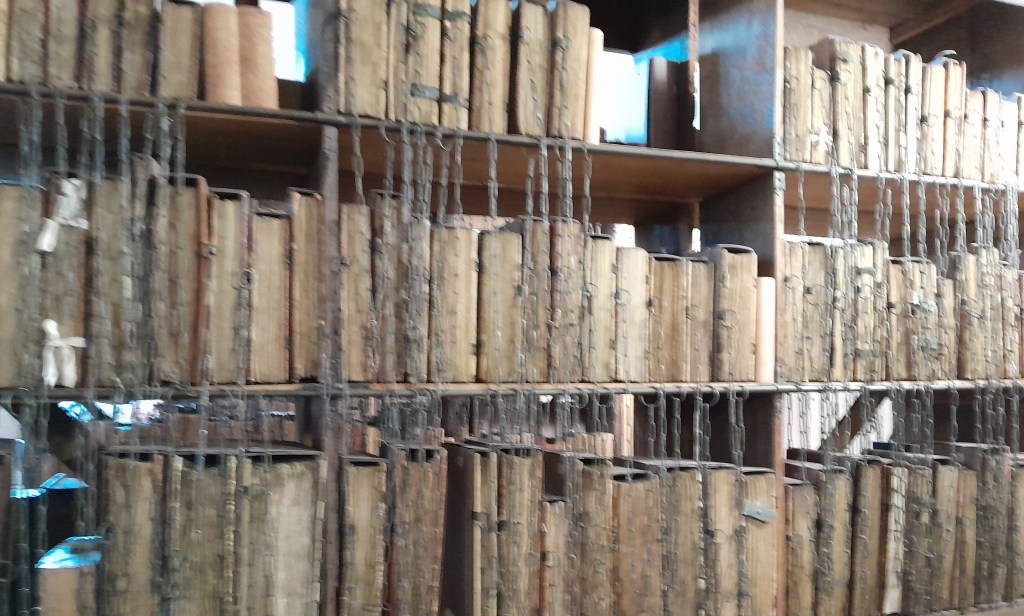
Amid a wonderful visit to the rolling green wonder that is Herefordshire, I came across this in Herefordshire Cathedral. The Chained Library was introduced by a lot of information about how time-consuming it was to prepare the vellum (animal skin) and to write on it. As a system against theft (but by whom and selling to whom?), it will have worked. The chained books were taken down and read, still chained to the shelf. How dismal must that have been, how unlikely for the reading to give rise to thought which was innovative or challenging?

I hope someone can tell me I am wrong.

It’s the policies.

Like many, I am glued to political developments in the U.S. Also, like many, I read Kamala Harris’ The truths we hold as soon as it was published in 2019. I was underwhelmed by it, and that seemed to be supported by the invisibility of Harris as VP throughout Covid. Now, it is clear that that was not through lack of her ability. So I have been glued to her Presidential campaign and her wise choice of a VP candidate who is not threatened by a strong woman. The success of her campaign is important across the globe.

It has been good to see that Harris has not got drawn into a Trump-created identity clash. As another female policitian said, she has gone high and her joyful demeanour will gain votes as Trump begins to look more and more like Trump the Grump.

But I hope Harris and those close to her are taking close heed of the calls to also defeat Trump on policies and their presentation. Abortion has been an effective distinguisher. There will be others: action on climate change, economy and help for those suffering from the obsession with growth, healthcare, and maybe even some action on work termination-at-will (Montana being the sole exception).

The best female leader the Labour Party never had was a clear example on solving problems with clear policies wherever she was Secretary of State in 1965-70. Barbara Castle drove and oversaw the Ministry of Overseas Development, developing the system

of loans to poorer countries. When she became Secretary of State for Transport, she addressed the problem of deaths on the road with measures we now take for granted: seat belts, speed limits, criminalisation of drink-driving, and its system of enforcement. Opposition to these measures focused on her being a woman. When she moved to Employment, she drove the Equal Pay Act 1970, before we even joined the EEC. Her paper In Place of Strife, proposing state-underpinned collective bargaining was opposed by unions (one union leader referred to knowing her in “dirty knickers”) but may yet find a place (see my https://uklabourlawblog.com/2024/07/23/bringing-wages-home-labours-proposal-for-a-fair-pay-agreement-in-the-social-care-sector-by-sandhya-drew/) . Castle’s policies brought about change.

It would be fantastic to have a US President who is a woman. But lest it be thought I have forgotten that the UK has its share of female politician non role models, here is this week’s comedy gold from Suffolk:

Bella Ciao: a tale of two songs

This is more a song for 25 April than to be discussed as we approach 25 December, but nevertheless, here goes.   Few songs are better known than the song Bella Ciao,  best known as a marching song by the Partisans.   A recent film Bella Ciao – Song of Rebellion traced the “obscure origins” of the song.  The directors talk about the film here. You can hear the song here.  The lyrics are: 

Una mattina mi sono svegliato,  [I woke up one morning]

o bella, ciao! bella, ciao! bella, ciao, ciao, ciao!

Una mattina mi sono svegliato,

e ho trovato l’invasor. [and I found the invader]

O partigiano, portami via,  [Oh partisan, take me away]

o bella, ciao! bella, ciao! bella, ciao, ciao, ciao!

O partigiano, portami via,

ché mi sento di morir.  [because I feel near to death]

E se io muoio da partigiano,  [and if I die as a partisan]

o bella, ciao! bella, ciao! bella, ciao, ciao, ciao!

E se io muoio da partigiano,

tu mi devi seppellir.  [you must bury me]

E seppellire lassù in montagna,  [bury me up in the mountains]

o bella, ciao! bella, ciao! bella, ciao, ciao, ciao!

E seppellire lassù in montagna,

sotto l’ombra di un bel fior. [under the shadow of a flower]

Tutte le genti ché passeranno,  [all the people who will pass]

o bella, ciao! bella, ciao! bella, ciao, ciao, ciao!

Tutte le genti che passeranno,

Mi diranno «Che bel fior!»   [will say to me – what a lovely flower]

«È questo il fiore del partigiano»,

o bella, ciao! bella, ciao! bella, ciao, ciao, ciao!

«È questo il fiore del partigiano, morto per la libertà!  [this was the flower of the partisan, who died for freedom]

Much less attention is given in the film to the fact that the song was previously a work song sung by the mondine:  seasonal rice workers in Italy’s Po Valley. Bizarrely, in the interview above, one of the directors says she ‘thinks’ this was before World War 2.  In fact, the mondine worked from the late 1800 to the first half of the 1900s.  Women of the poorest social classes came from Emilia-Romagna, Veneto, Lombardy and Piedmont.  You can still see the fields if you take a train from Paris to Milan.  The workers, all female, were required to work long hours, in poor conditions, for low pay, supervised by men.  A series of strikes led to 8 hour working days in 1906 and 1909.  A 1949 film Riso Amaro was set among the workers.   The song is clearly the origin of the Partisan song and you can hear it here, sung by the Italian singer Milva.  The lyrics are:

Alla mattina appena alzata [in the morning, as soon as I am up]

o bella ciao bella ciao bella ciao, ciao, ciao

alla mattina appena alzata

in risaia mi tocca andar. [I must go to the paddy field]

E fra gli insetti e le zanzare  [among the insects and the mosquitoes]

o bella ciao bella ciao bella ciao ciao ciao

e fra gli insetti e le zanzare

un dur lavoro mi tocca far.  [tough work befalls me]

Il capo in piedi col suo bastone  [the boss with his stick]

o bella ciao bella ciao bella ciao ciao ciao

il capo in piedi col suo bastone

e noi curve a lavorar.   [bends us to work]

O mamma mia o che tormento  [mother, what torment]

o bella ciao bella ciao bella ciao ciao ciao

o mamma mia o che tormento

io t’invoco ogni doman.  [I call on you every day]

Ed ogni ora che qui passiamo  [and every hour that we pass]

o bella ciao bella ciao bella ciao ciao ciao

ed ogni ora che qui passiamo

noi perdiam la gioventù.  [we lose our youth]

Ma verrà un giorno che tutte quante  [there will come a day that all of us]

o bella ciao bella ciao bella ciao ciao ciao

ma verrà un giorno che tutte quante

lavoreremo in libertà  [will work in freedom]

The song recording the resistance and fight of the female rice workers is to my mind every bit as important a history as its version in the anti-fascist fight.   Thanks to Edda Bertani for reminding me that resistance takes many forms.   

Silicosis killing Rajasthani stoneworkers

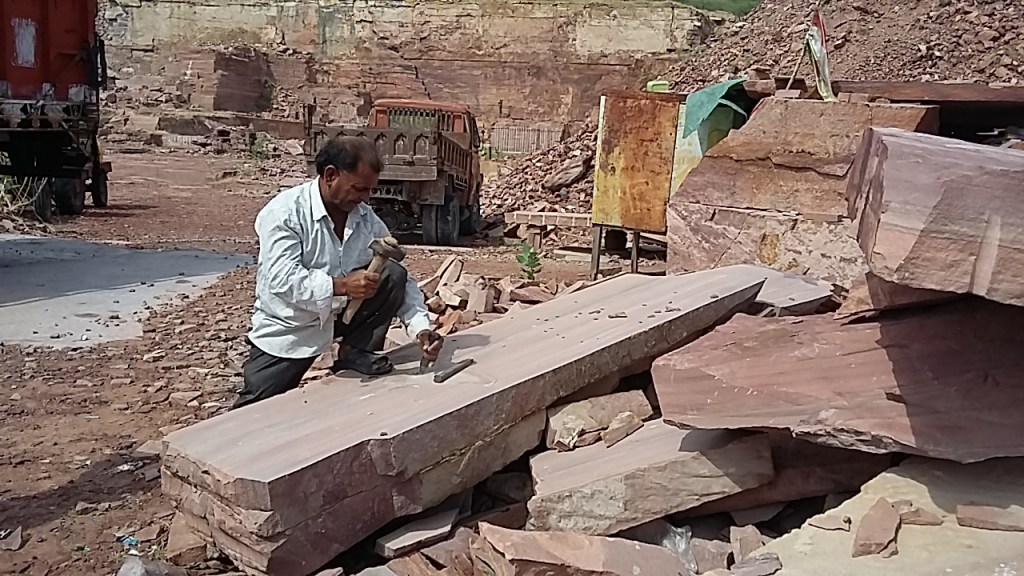
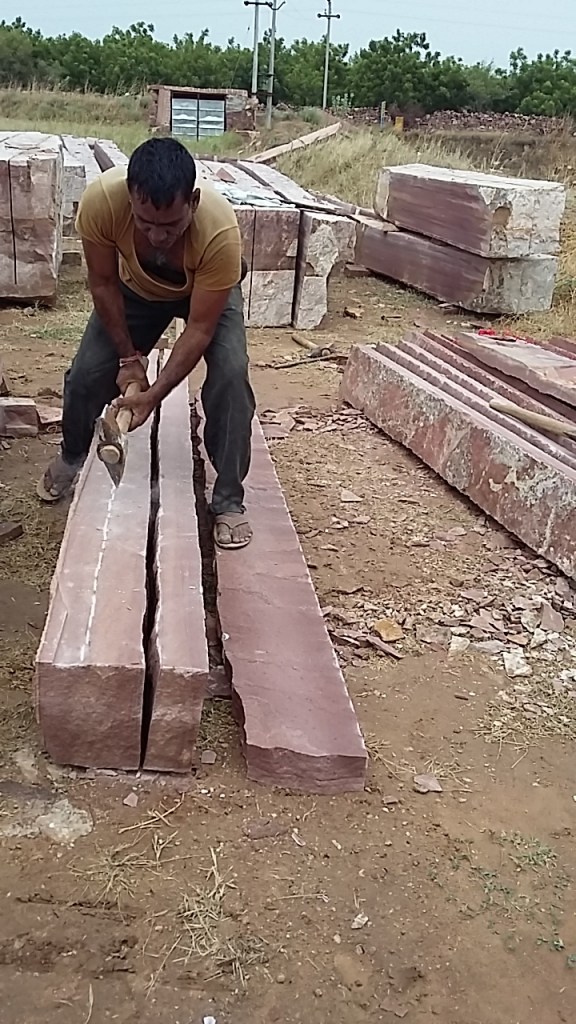
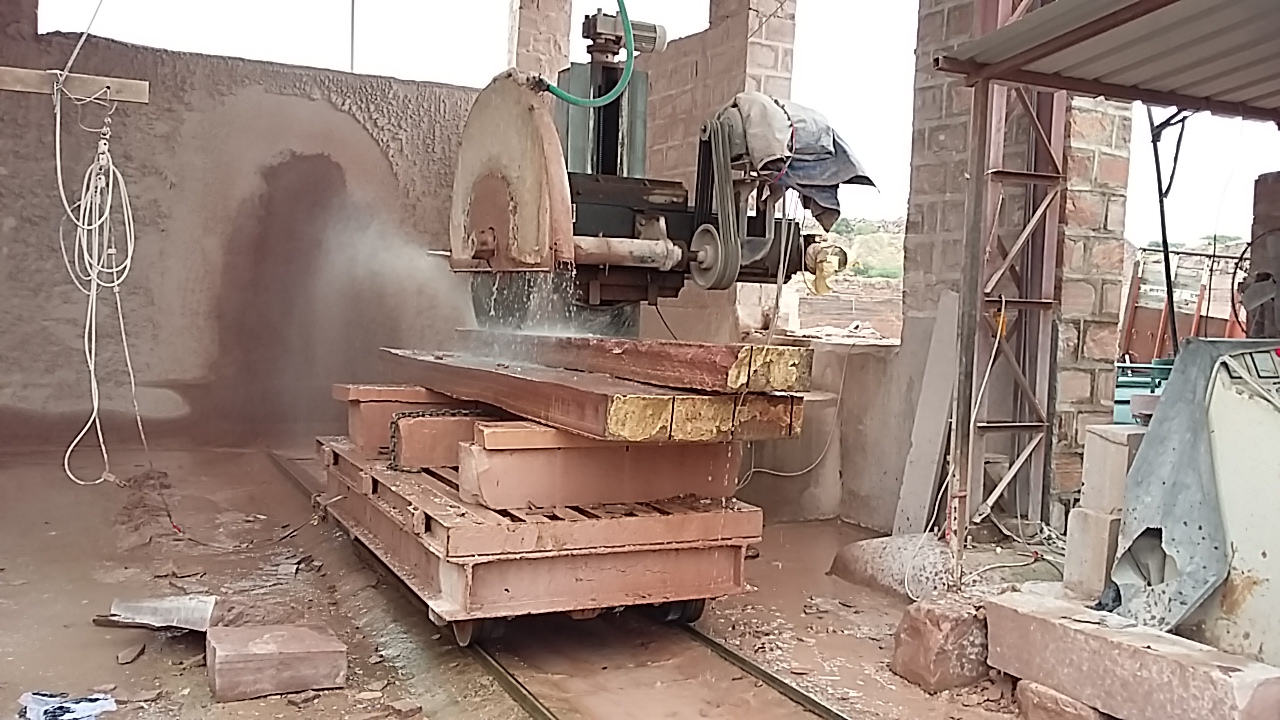
Visitors to Rajasthan in India see its palaces and houses of pretty red and pink sandstone. Yet the work of quarrying and cutting that stone is costing workers their lives.

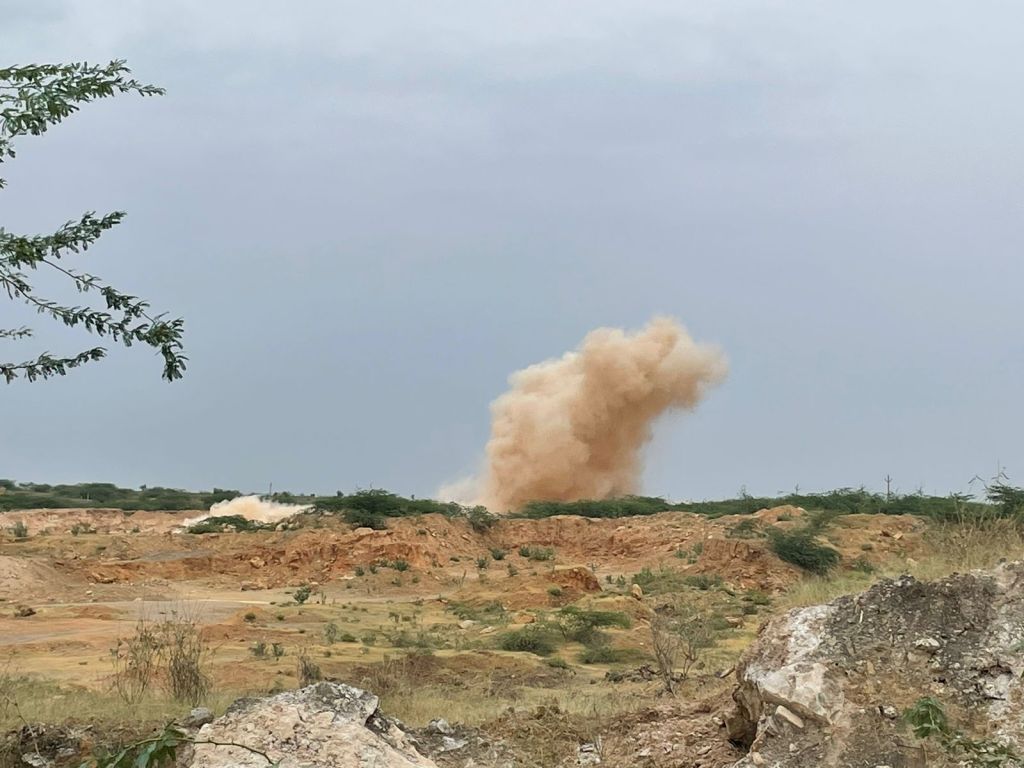
On October 18th, on the outskirts of Jaipur, I participated in an important consultation on Business and Human Rights in the Mining Sector organised by the excellent Mine Labour Protection Campaign.   Rajasthan is the second resource richest state in India for mineral and stone mining.    The quarry work is done across the state both in big mines, such as the Vedanta mine at Zawar outside Udaipur, which I had visited a couple of days before, and smaller mines, which I had visited the previous day outside Jodhpur (many thanks to Advocate Idrish Mohammed for organising the Jodhpur visits and for his insights).

Regulation of stone mining is shared between the All-India Ministry of Mines and the Rajasthani state level Department of Mines & Geology. A system of Rajasthan- administered licenses for mining is in place to attempt to regulate the sector.

The consultation discussants, from all over India, identified connected problems of low wages and poor working conditions.  The focus, however, was on the tens of thousands of workers who have died, and who continue to die, from silicosis.  This is a respiratory disease which is caused by inhalation of crystalline silica dust. The worker’s lungs are irreversibly hardened and scarred.

The focus of discussion was how to prevent the disease and how to compensate workers or their bereaved families. Medical evidence suggests silicosis can be avoided by greater automation of drilling and cutting and to some extent by mask wearing. While this is more or less implemented in the large mines, it is less so in the smaller mines which operate outside formal licensed systems. Wet drilling for example, prevents contraction of the disease or significantly diminishes the risk.

Wet Drilling

There is another big obstacle to protection, respect and remedy for these workers. Any discussion about labour rights in India has to include the fact that an overwhelming percentage of workers (estimated at 93%) work in the informal, otherwise termed unorganised, sector. Distinctions have to be made here between the informal sector and informal work, which together form the informal economy. Informal work is defined by the ILO at the ICLS 15th session as “all remunerative work (i.e. both self-employment and wage employment) that is not registered, regulated or protected by existing legal or regulatory frameworks, as well as non-remunerative work undertaken in an income-producing enterprise. Informal workers do not have secure employment contracts, workers’ benefits, social protection or workers’ representation.” The role of informality in India and other South Asian countries was discussed by myself and others at an Oxfam India 2020 seminar.

In 2013-14, the Ministry of Labour issued a Report in which they described informal labour as Labour relations – where they exist – are based mostly on casual employment, kinship or personal and social relations rather than contractual arrangements with formal guarantees. They quoted the First Indian National Commission on Labour (1966- 69) which defined the unorganised sector workforce as –“those workers who have not been able to organize themselves in pursuit of their common interest due to certain constraints like casual nature of employment, ignorance and illiteracy, small and scattered size of establishments”. Most importantly, the Commission on Informal Labour produced the Sengupta Report which examined the different ways of working grouped under the broad umbrella. A product of one of its recommendations, The Unorganised worker Social Security Act 2008 defines the “unorganised sector” as an enterprise owned by individuals or self-employed workers and engaged in the production or sale of goods or providing service of any kind whatsoever, and where the enterprise employs workers, the number of such workers is less than ten.

Informality is thus a very broad term which needs precision in each particular context. In the sandstone mining sector, it may involve working in small mines with no licenses or working in licensed mines, but with no labour regulation. As noted in the Sengupta Report, informal wage work in the formal sector is growing. Workers may have no written contracts setting out their pay and hours. This may lead to long unsafe hours of working. There may be lack of clarity as to who the employer is. Many mines are managed by agents. Workers are more likely to be dismissed out of hand and to have to move to another mine, leading to exposure from a variety of mine work. These workers are less likely to have the bargaining power to seek safe conditions and fair pay. If they contract silicosis, they may be unable to prove who they worked for and their status.

Four core ILO Conventions set out steps to promote collective bargaining CO 87 and 98 and on health and safety at work CO 155 and CO 187 . However, although they form part of the Declaration and thus bind India as an ILO member, they are not yet ratified by India, leading, it can be argued, to a lack of focus on building up these capabilities.

The State of Rajasthan has issued policies on silicosis. Since 2021, the State has implemented an automated portal for state compensation claims. These are fixed tariffs which do not fully compensate for loss. Tort law claims face formidable obstacles: lack of evidence of the employment relationship; medical evidence which often misdiagnoses; lack of funding for claims; and the slow pace of litigation in the Indian courts. The very people who need compensation by law most are in the worst position to assert their rights.

At the same time, digitalisation is enabling greater monitoring of the stone itself. Since the Rajasthan Minerals (Prevention of Illegal Mining, Transportation and Storage) Rules, 2006, any load leaving a mine and headed for market must be logged and then monitored on its journey. This is called an e-rawanna. I witnessed in one mine the weighing of a truck laden with stone. Its weight, destination, estimated time of arrival and plate were all logged in. Failure to arrive in time or at all caused the load to become unauthorised and thus to lose access to the formal market.

The conference concluded in the agreement of a proposal to the State of Rajasthan. The proposal is that when applying for a license, and uploading the application, the applicant should also list their workers. This proposal has the merit that it encourages registration and formalisation of workers. The applications can be made via an app and, has been said above, much of the sector is already digitalised. The State is in the run up to elections, but there is optimism that this proposal may be acceded to, and no real arguments against it. It has a dual outcome of encouraging licensing and taking a step towards greater visibility of workers.

Does the formal sector have a role to play? I have heard mining sector business representatives who, perhaps feeling that this reflects badly on their sector, deny that there is a problem at all, while also saying that the informal sector is invisible to them. In some cases, mines in the formal sector have informal / unorganised workers working for them. The formal sector has a role to play to identify and formalise their workers. As regards encouraging safe practice in informal mines, the competitive principle may be at play but since the sector as a whole suffers the reputational damage, promotion of safe practices has the logic of self-interest.

Again, thinking of the sector as a whole, where does this stone go?  As is well known, supply chains are constantly snaking into different direct and indirect routes, domestic and export. In a 2021 ILO Report, it was identified that supply chain agreements had no focus on sustainability but instead focused on repeat business, large volume orders and timely payments. Some tracing is possible. A 2020 study by Charan and others , looking at the export business, identified that – at the time examined – 73% of sandstone went to the port of Mundra and of that, 90% to the UK. One large UK company is Marshalls , which reported that it supported a multi-lateral consultation in Brussels on the health of Indian workers in the quarrying and mining sector, with the Rajasthan Mine Workers Welfare Board.   In the case of sandstone now headed for the EU market, many EU countries, notably France and Germany now have national due diligence laws. An EU Directive on corporate accountability down supply chains is on its way. In addition, in the UK, a parent company may have assumed responsibility over its subsidiaries or its supply chain sellers so as to have assumed liability in tort law, for which see Vedanta and Shell.

Prevention is paramount. One conference participant’s lament still sounds: “I have not prevented a single person dying from silicosis”.  The search continues to protect this most basic of human rights from the impact of stone cutting business activity, to respect that right through positive state obligations, and to effectively remedy breaches. Together, these may encourage those who have economic monopsony power – whether they are buyers of work, or buyers of the stone the workers produce – to find safe working methods for those who work with sandstone but have no countervailing power to protect themselves.

Pregnant pause over the pregnant man

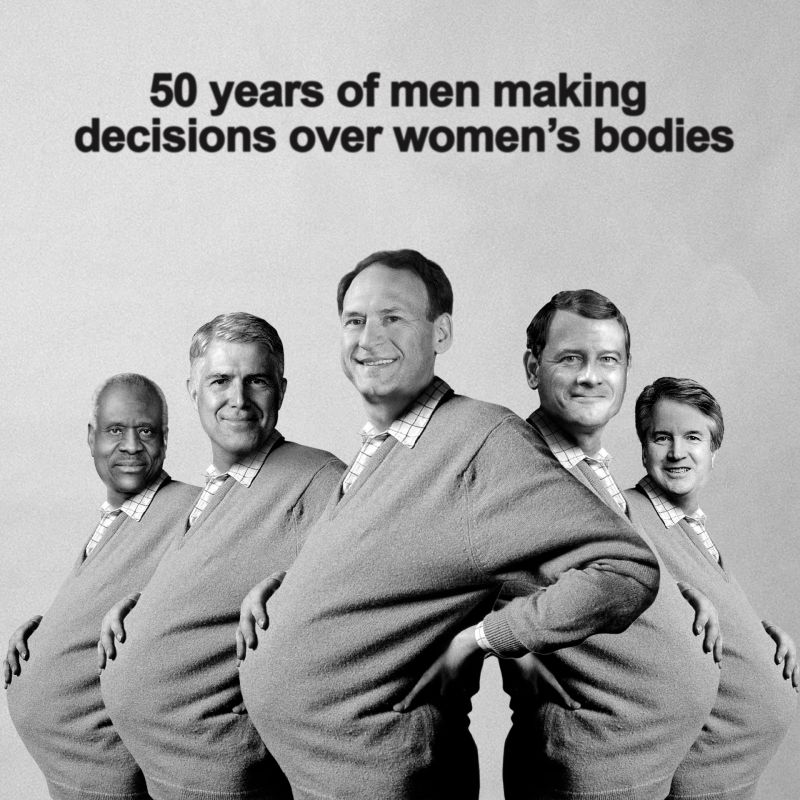
In 1970, Saatchi & Saatchi famously designed an advertisement for the Health Education Council. It showed someone who was clearly a man, clearly pregnant. Would you be more careful if it was you that got pregnant? it asked.

In 2022, Saatchi & Saatchi posted an update in response to the US Supreme Court’s Ruling in Dobbs v Jackson Women’s Health Organization, holding that there was no constitutional right to an abortion, thus overturning Roe v Wade.

In the UK, women sacked when they declared their pregnancy (the bread and butter of my early practice at the Bar), faced the argument (yes, really) that an ill man would have been treated as badly, and therefore there was no less favourable treatment. The question of comparison was put to bed when Webb v EMO Air Cargo (1994) was referred to Court of Justice for a preliminary ruling. The Court gave judgment crisply.

25 As Mrs Webb rightly argues, pregnancy is not in any way comparable with a pathological condition, and even less so with unavailability for work on non-medical grounds, both of which are situations that may justify the dismissal of a woman without discriminating on grounds of sex.

This pregnant woman/ pregnant man binary does not undermine equality but instead provides a strong test of it. Does pregnancy create a motherhood penalty and, less referred to, a fatherhood premium in pay? How do medical services stand compared to others? Hollywood had “no marriage/ no pregnancy” clauses in the contracts of female stars, resulting in botched abortions. Bollywood, it seems, still does have such clauses. None of the male movie moghuls thought they might find roles for pregnant women.

The uniqueness of the capacity for pregnancy and birth is linked to biological gender. It follows (hopefully) years of monthly menstruation. This lived experience, varying widely between women, provides a route to understanding over half our species, just as its lived history provides a route to understanding a nation.

Of course, not all women become pregnant or mothers – whether by choice or not. Pregnancy does not define being a woman. But, but, but. Only women have the biological equipment to conceive a pregnancy and give birth.

One’s reaction to that biological equipment, how one uses it and with whom, whether one’s biological equipment are at one or at variance with one’s felt gender, are of course all to be recognised and respected. But smothering over the roots with the term pregnant people – as a descriptor, not a sensitive form of address – risks, in my view, concealing some very strong pointers we have to how (in)equality works in our society.

“They are only nameless because you do not know their names.”

I have just finished rewatching the film Persian Lessons. There is no actual Farsi/ Persian spoken, apart from at the very end. In fact, the whole film involves a suspension of disbelief. Set in a concentration camp, a small bedraggled man (we know him as Reza) finds ways to survive. He “teaches” Persian to one of the SS Officers, using the names of those arriving to be forced into hard labour and then murdered in the camp. The Officer, who was a chef in civilian life and only joined the Nazi party because of some chaps on the street who seemed to be having a good time, wants to go to Persia after the war to find his anti-fascist brother. In one scene, he recites a poem he has written in “Persian” about clouds going eastward.

The relationship between the two evolves during the film to more challenge by Reza. In one scene, the office refers to “the nameless hordes”. Reza responds: They are only nameless because you do not know their names”. In the end, Reza survives and is able to tell allied troops the names of those in the camp, memorised for his “Persian”, in a recital with all the relentlessness of Kaddish.

Behind the film’s deep reflection on language stands the insight of Primo Levi, reflecting as a survivor as witness to atrocity:

“had they even had pen and paper, they would not have been witness, because their death had started before even that of their body. Weeks, months before their extinction, they had already lost the ability to observe, remember, relate and express themselves. We speak in their stead, by proxy.” [1]


[1] Author’s translation from “anche se avessero avuto carta e penna, non avrebbero testimoniato, perché la loro morte era cominciata prima di quella corporale. Settimane e mesi prima di spegnersi avevano già perduto la virtù di osservare, ricordare, commisurare ed esprimersi. Parliamo noi in loro vece, per delega”. Primo Levi, I sommersi e I salvati (The drowned and the saved) (Einaudi, 1986)

This insight into the nature of interest in human rights remains to be grasped in UK judicial circles. It is far more than associational or representative interest.

The artist

Very pleased to be working in the first three weekends of July on my mum’s art exhibition as part of Cambridge Open Studios.

The Open Studio movement has been gaining ground across the country. Artists open their studios to showcase their work in a relatively informal way.

My mother, Rani Drew, paints in vivid watercolours, bringing to life animals, forests, hills, lakes and skies. Below is an example.

What a wonderful way to spend July.