In 1970, Saatchi & Saatchi famously designed an advertisement for the Health Education Council. It showed someone who was clearly a man, clearly pregnant. Would you be more careful if it was you that got pregnant? it asked.
In 2022, Saatchi & Saatchi posted an update in response to the US Supreme Court’s Ruling in Dobbs v Jackson Women’s Health Organization, holding that there was no constitutional right to an abortion, thus overturning Roe v Wade.
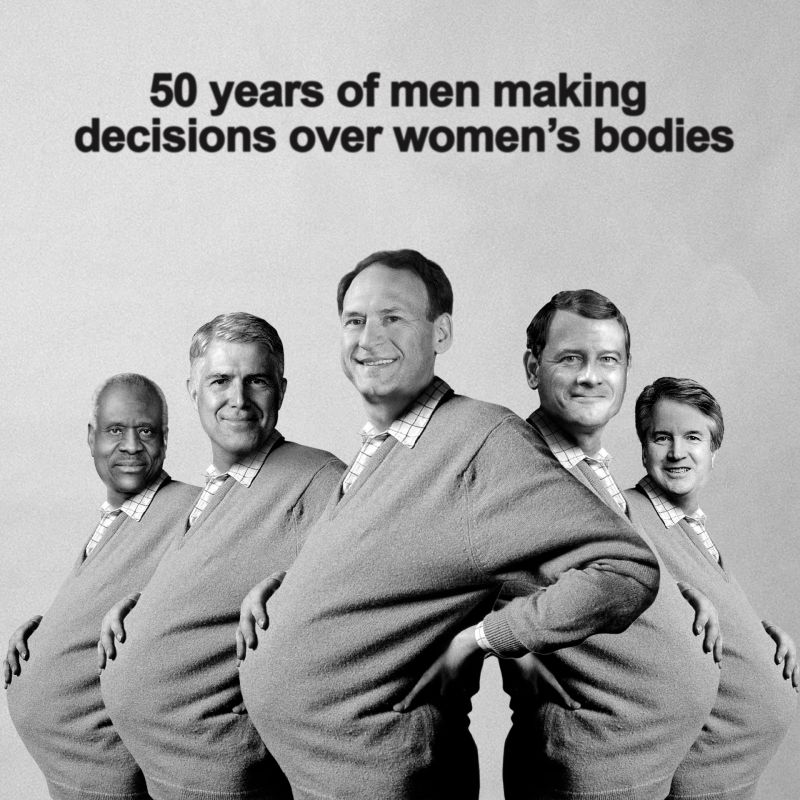
In the UK, women sacked when they declared their pregnancy (the bread and butter of my early practice at the Bar), faced the argument (yes, really) that an ill man would have been treated as badly, and therefore there was no less favourable treatment. The question of comparison was put to bed when Webb v EMO Air Cargo (1994) was referred to Court of Justice for a preliminary ruling. The Court gave judgment crisply.
25 As Mrs Webb rightly argues, pregnancy is not in any way comparable with a pathological condition, and even less so with unavailability for work on non-medical grounds, both of which are situations that may justify the dismissal of a woman without discriminating on grounds of sex.
This pregnant woman/ pregnant man binary does not undermine equality but instead provides a strong test of it. Does pregnancy create a motherhood penalty and, less referred to, a fatherhood premium in pay? How do medical services stand compared to others? Hollywood had “no marriage/ no pregnancy” clauses in the contracts of female stars, resulting in botched abortions. Bollywood, it seems, still does have such clauses. None of the male movie moghuls thought they might find roles for pregnant women.
The uniqueness of the capacity for pregnancy and birth is linked to biological gender. It follows (hopefully) years of monthly menstruation. This lived experience, varying widely between women, provides a route to understanding over half our species, just as its lived history provides a route to understanding a nation.
Of course, not all women become pregnant or mothers – whether by choice or not. Pregnancy does not define being a woman. But, but, but. Only women have the biological equipment to conceive a pregnancy and give birth.
One’s reaction to that biological equipment, how one uses it and with whom, whether one’s biological equipment are at one or at variance with one’s felt gender, are of course all to be recognised and respected. But smothering over the roots with the term pregnant people – as a descriptor, not a sensitive form of address – risks, in my view, concealing some very strong pointers we have to how (in)equality works in our society.
 Londonlawcalling